

Is Your Moisturizer Actually Safe?
I screened the internet's favorite creams for hormone safety and skin barrier repair. Here is my final verdict.

This week, I’m trying to buy a clean moisturizer. Something that will make my skin happy and not introduce toxins, endocrine disruptors or anything else unhappy to my system. That sounds like it should be easy …. but is it?!
I wish someone had curated 5 options for me at different price points and different skin types - keeping in mind that I want the simplest, more natural, healthiest stuff that filled with nothing nasty. So here I am doing that for you!
Last week, we broke down the actual architecture of dry skin and the 4-part moisturizing framework every effective formula has to balance (If you haven’t read it, you might want to, I will reference these terms a lot in this post):
Water + Humectants + Emollients + Occlusives
But now, I am adding a second set of filters.
I want to cut out anything that is known to be unsafe during pregnancy or known to interfere with hormones (endocrine disruptors)
Special note on Endocrine Disruptors:
An endocrine disruptor is a chemical that can interfere with your endocrine system, meaning your hormone system.
The endocrine system affects things like ovulation, menstrual cycles, fertility, pregnancy, libido, sperm production, muscle growth, hair growth, metabolism, blood sugar regulation, stress response and tissue repair.
They an interfere either by mimicking a hormone, blocking a hormone receptor, increase or decrease hormone production, and change how hormones are broken down or transported.
Since hormones work at very small concentrations, these small alterations can cause large biological effects - specially during sensitive windows (puberty, perimenopause, menopause, trying to conceive, pregnancy and fetal development).
I just want a moisturizer that works AND avoids any unnecessary exposure to harmful substances and endocrine disruptors.
So I took to Amazon to see what options and I had and my goal was simple: find a few excellent, practical moisturizers - without falling for luxury fluff, or paying extra for marketing.
Before we get to the rankings, here is the filter I used.
The Ingredients I’m Avoiding
Disclaimer: I am not saying every ingredient below is guaranteed to harm fertility or pregnancy. What I want to do is to lower any risks and cut out unnecessary exposure where the benefit does not justify the uncertainty.
Retinoids and Vitamin A derivatives:
On the label they appear as: retinol, retinal, retinaldehyde, retinyl palmitate, retinyl acetate, tretinoin, adapalene, tazarotene.
They are mostly used for improving skin cell turnover, acne, and anti-aging. Since they increase collagen signaling, they can greatly improve skin texture and help skin look more youthful and reduce signs of damage. You can get both over the counter versions as well as prescription varieties. For moisturizers specifically, retinoids are usually added as a bonus active for anti-aging or smoothing.
Why I am removing it from my routine:
The scientific consensus is a hard pause during TTC and pregnancy due to fetal development risks (not fertility suppression).
A 2015 meta-analysis showed no increased risk of birth defects or miscarriages from accidental topical exposure in the first trimester (1) - which is highly reassuring if you used it before you knew you were pregnant. But because we can’t ethically run controlled safety trials on pregnant individuals, intentional use is a definitive cut.
Fragrance/Perfumes:
The real problem with "fragrance" on a cosmetic label is that it isn't a single ingredient—it’s a legal loophole. To protect proprietary trade secrets, companies are allowed to hide a cocktail of hundreds of undisclosed synthetic chemicals under the umbrella term "fragrance" or "perfume." My chief concern here is phthalates, chemical fixatives hidden in these blends that are established endocrine disruptors.
There are lots of similar sounding terms you will see on bottles so here is what they legally mean:
Fragrance-free - No added fragrance/perfume ingredients (Best Choice)
Unscented: t simply means the product has no noticeable smell to your nose, which frequently means the manufacturer added hidden masking fragrances to cover up the foul chemical odor of the raw ingredients. Avoid this label as much as you can!
No perfume - claim is better than a heavily scented lotion, but it is legally less precise than fragrance-free, meaning you still need to check the label.
Hypoallergenic - It is pure marketing fluff with no legal definition or safety guarantee. If you want true peace of mind, skip the front-label claims entirely and audit the ingredient list on the back.
Natural scent - usually implies the inclusion of essential oils or botanical extracts - which might sound wholesome, but they are actually highly concentrated volatile compounds that risk both skin irritation and endocrine interference
This brings me to essential oils. And while I love them, I am cutting them out.
Essential oils:
It is easy to think of them as safe because they come from plants, but from a formulation perspective, essential oils are basically highly concentrated, volatile fragrance compounds.
As a scientist, I prefer to look directly at the data, and a few specific studies caught my attention. One notable, albeit very small, study linked the topical use of lavender and tea tree oils to prepubertal gynecomastia - the temporary enlargement of breast gland tissue - in three young boys (3). Strikingly, the authors reported that the condition completely reversed itself once the boys stopped using the oils, pointing toward a clear hormonal trigger. To add to that, separate animal models found that female rats exposed to inhaling lavender oil experienced an early onset of puberty (4).
Though we cannot base an entire lifestyle philosophy on a couple of small or animal-centric studies., these findings hint at potential estrogenic and endocrine-disrupting activity and it spooked me enough to pause. I don’t want to wait around for definitive proof of harm. For the sake of safety, I am going to err on the side of caution and cut them out completely until I can look into the data more deeply.
Some Sunscreen Ingredients:
Though I am not looking for this right now - some daily moisturizers pull double duty as an SPF, so I wanted to include it here.
The ingredients I am banning from my cupboard are: Older chemical UV filters like oxybenzone (benzophenone-3), octinoxate (ethylhexyl methoxycinnamate), homosalate, and octocrylene.
My decision to cut these comes down to a dual threat: high systemic absorption and documented endocrine disruption. The American College of Obstetricians and Gynecologists (ACOG) explicitly flags oxybenzone as a chemical to avoid when possible in personal care products before and during pregnancy (2). A 2025 review on organic UV filters heavily scrutinized these ingredients, evaluating their negative impacts on reproductive and developmental health - especially benzophenone derivatives like oxybenzone. The Endocrine Society highlighted a Danish study showing that several common chemical UV filters actually interfered with human sperm-cell function in vitro and directly mimicked progesterone activity. I don’t want ingredients on my face that mimic my own reproductive hormones.
You do have the option of mineral sunscreens like Zinc Oxide and Titanium Dioxide that are recognized as safe. But if you absolutely prefer chemical sunscreens over mineral ones, there is a bright spot on the horizon.
The FDA recently approved a newer-generation ingredient called bemotrizinol (commercially known as PARSOL Shield). Unlike older filters, it has incredibly low skin absorption. The European Scientific Committee reviewed it under its massive chemical name (2,4-bis-{[4-(2-ethyl-hexyloxy)-2-hydroxy]-phenyl}-6-(4-methoxyphenyl)-(1,3,5)-triazine) and gave it a highly favorable safety profile, finding zero evidence of skin sensitization, mutagenicity, or teratogenicity (birth defects) at concentrations up to 10%. In the US it will be allowed to be used in sunscreen upto 6%.
While bemotrizinol is a massive win for cosmetic chemistry, finding it in US formulations is still a bit of a treasure hunt. For my daily morning moisturizers right now, I am keeping things simple and completely bypassing chemical UV filters in favor of a clean slate.
How I Ranked the Moisturizers
I ranked each product using five questions:
Does it satisfy the 4-part moisturizing framework?
Water, humectants, emollients, and occlusives.Is it fragrance-free?
Not unscented. Not naturally scented. Fragrance-free.Does it contain the ingredients I am avoiding?
No retinoids, essential oils, fragrance, or chemical sunscreen filters.Does it support the skin barrier?
Bonus points for ceramides, cholesterol, fatty acids, squalane, niacinamide, or hyaluronic acid.Is the price justified by the formula?
Because I am not paying luxury prices for glycerin in a pink jar.
Top 5 Amazon Face Moisturizers Ranked
5. Clinique Moisture Surge 100H Auto-Replenishing Hydrator Oil Free Face Moisturizer | With Hyaluronic Acid, Aloe Bioferment and Vitamins C + E | For All Skin Types | Hydrating + Moisturizing
Rating: ⭐ / 5
Price: $17 for 15 mL or 0.5oz
Would I buy it? Definitely not.
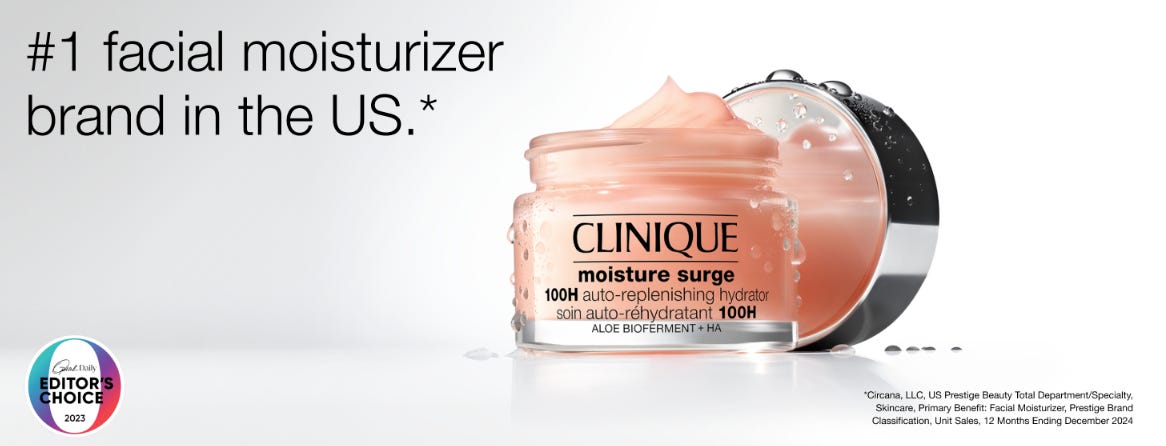
With a whopping 43 ingredients - there a lot to unpack about the allegedly #1 facial moisturizer brand in the US. Clinique’s big claim is that they are providing 100 hours of auto replenishing hydration, so does it have the ingredients to live up to the claim and will it pass the safety test?
Hydration:
To its credit, this formula is a humectant powerhouse. It packs 8 different water-binding ingredients (including glycerin, hyaluronic acid, and green tea extract) to aggressively flood the top layer of your skin with water.
Structure of this moisturizer:
Where this moisturizer falls short is on the last step of the 4 part moisturizing framework, the occlusives. It has 2 silicone based ingredients that double duty as emollients and occlusives. Both of these ingredients (Dimethicone and Trisiloxane) are very light weight and moderate occlussives - meaning that they are just not enough to keep in the moisture for dry skin, and there is the whole debate about the environmental issues about their biodegradability which makes me not want to pick this up.
Further Down the label:
The more you look down this list of ingredients, the more you find unnecessary fluff and some red flags that make me write this off completely.
Palmitoyl Hexapeptide-12 (The Peptide): This is a great ingredient in theory for collagen signaling. However, it’s buried so far down the 43-ingredient list that the actual dosage is likely minimal. It feels much more like a "marketing claim" ingredient than a functional powerhouse.
Ammonium Acryloyldimethyltaurate/VP Copolymer: A massive mouthful that acts as a synthetic polymer. Depending on how you define it, it can be categorized as a microplastic-type liquid ingredient used purely for texture. Do I want liquid microplastics on my skin? No.
Oleth-10: This is an ethoxylated surfactant. The clean-beauty world rightfully flags this due to potential contamination with 1,4-dioxane (a known carcinogen) if the manufacturing purification isn't flawless. It’s also a known skin irritant. Without knowing the purity standards of their supply chain, I prefer to avoid this completely
BHT (Butylated Hydroytoluene): As a food scientist, I see BHT used as an antioxidant all the time to keep shelf-stable fats from going rancid - and it does the same job here by keeping the oils in this formula stable. It’s not my favorite ingredient, to me, it’s not an automatic deal breaker. It has been investigated for potential endocrine disruption - mostly due to some thyroid-related findings in high-dose animal studies; But current cosmetic safety reviews from around the world haven't found it to be a risk at normal, topical formulation levels. That makes this a yellow flag to me. It’s not panic-worthy, but since I am actively cleaning up my routine right now, it’s definitely not something I’m going out of my way to buy.
Red 4 & Yellow 5: Purely cosmetic synthetic dyes used to make the gel look a pretty, marketable pink. Dyes offer absolutely zero skin benefit, add an unnecessary risk of irritation or allergy, and carry manufacturing wastewater concerns.
My Verdict:
For me, this is a hot pass.
Being that I am actively trying to audit my life to have less toxins, less endocrine disruptors, and less microplastics, this formula simply does not make the cut. When you factor in the high price tag—an incredibly expensive $17 for a tiny 0.5 oz jar—there are just too many yellow flags, unnecessary synthetic dyes, and lightweight silicones that don’t provide enough of an occlusive barrier for truly dry skin.
A premium price should buy you a high-performance, worry-free formulation. Instead, you’re paying a massive upcharge for filler dyes and heavy synthetics. This product simply isn’t working hard enough for my skin, my body, or my wallet to justify the price.
After looking at this one, I switched tracks to find easier to read, simple daily use moisturizers.
4. Aveeno Daily Moisturizing Face Lotion with Soothing Prebiotic Oat, Lightweight Non-Greasy Facial Moisturizer for Normal to Dry, Sensitive Skin, 24-Hour Moisture, Fragrance-Free
My Rating: ⭐⭐⭐ / 5
Price: $11.24 for 5 oz
Ingredient Count: 17
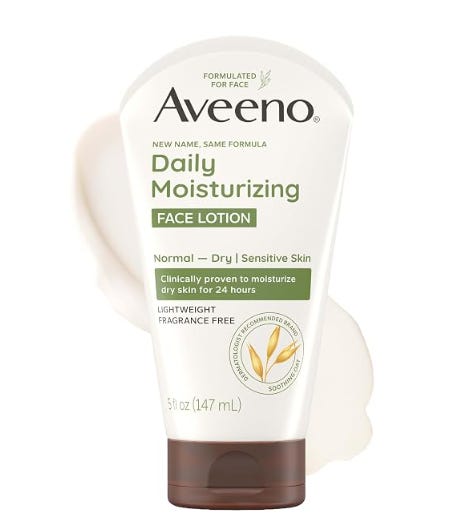
With a lean count of just 17 ingredients, this is a simple, solid, fragrance-free formula. It checked off the baseline requirements of my 4-part moisturizing framework: you get water, glycerin, emollients, and dimethicone. It is a well-built, incredibly low-drama bottle, but it lacks when it comes to barrier-repair.
The Formulation Breakdown:
The Hydration Base: Water takes the top spot to give your skin that immediate flood of moisture and deliver the actives.
The Humectants: It relies heavily on glycerin. As always, glycerin is excellent, though the overall water-binding system here is very basic.
The Emollients: Strong and comforting. The formula utilizes fatty alcohols and fatty acids to smooth down rough skin cells and soften the skin texture.
The Occlusive Shield: It uses dimethicone to slow down water loss without making you look or feel greasy. It’s a silicone which we have discussed already. It’s alright. Not the best, not the worst.
Exposure Risk:
There are no flashing red flags here:
No Retinoids or Vitamin A derivatives
No Fragrance or Essential oils
No Chemical sunscreen filters
No BHT/BHA
No Strong exfoliating or salicylic acids
No Hydroquinone
The only ingredients that some hyper-clean internet forums might tell you to avoid are Phenoxyethanol (the preservative) and Ceteareth-20 (an emulsifier). However, looking at the actual toxicology, I would absolutely not make either of these an automatic rejection based on this clean profile.
The Main Limitations: While this formula is perfectly safe, it is incredibly bare-bones. It completely misses the advanced, skin-identical molecules that actually rebuild a damaged stratum corneum. It contains:
No Ceramides
No Cholesterol
No Hyaluronic Acid
No Panthenol (Vitamin B5)
No Urea
No Niacinamide
At $11.24 for a generous 5 ounces, the price point is incredibly budget-friendly. But here is my ultimate criticism: when you look at what you can get from a classic, dermatologist-trusted staple like Vanicream for a similar price, this formula just feels like it’s falling a bit short.
It is a completely safe, low-drama daily moisturizer for dry or sensitive skin. But because it completely skips the ceramides, cholesterol, and soothing agents, it isn’t doing any heavy lifting to actively repair your barrier. It’s fine, it’s safe, but we can do better.
3. La Roche-Posay Toleriane Double Repair Face Moisturizer, Daily Moisturizer Face Cream with Ceramide and Niacinamide for All Skin Types, Oil Free, Fragrance Free
Rating: ⭐⭐⭐⭐ / 5
Price: $24.99 for 3.38 fl Oz
Would I buy it: Probably not
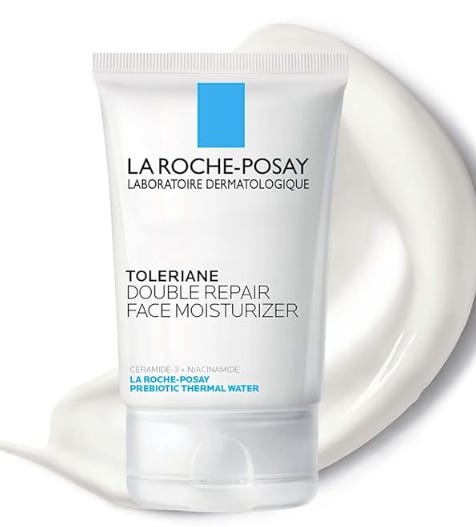
Reading this ingredient list made me breathe an immediate sigh of relief, especially after looking at the last one. If you are actively cleaning up your routine right now, this is how you build a solid, low-exposure formula.
The Hydration: It starts off strong with water as the very first ingredient, doing the actual job of delivering baseline hydration to your skin. Right behind it is glycerin as the second ingredient. As a food scientist, I will sing glycerin’s praises all day—it is a gold-standard humectant that pulls water into the skin efficiently, without any marketing fluff.
The Emollient & Barrier Strength: The emollient game here is incredibly robust. This formula relies on a blend of squalane, skin-identical fatty acids, and Ceramide NP. This isn't just about making the skin surface feel temporarily slick; this combination shows real, intentional barrier-logic designed to smooth down dry cells and mimic your skin's natural fats.
The Occlusive Strategy: For its sealing layer, it relies on dimethicone (same as in Clinique) as the main occlusive-like ingredient. Dimethicone is a lightweight, breathable silicone - it is simply not the strongest or most heavy-duty occlusive out there. However, because it's paired here with a much heavier emollient team - like squalane, myristyl myristate, and fatty acids - it works a bit better as a lighter daily morning moisturizer that won't leave you feeling like a greaseball. It's still a silicone though, meaning it comes with those same environmental biodegradability debates.
My Main Concerns: Because this formula completely skips the endocrine disruptors and toxicological question marks, my only real critiques here are mechanical:
It’s still low on heavy-duty occlusives: If you have aggressively dry skin, the dimethicone barrier might not be enough to stop evaporation throughout the day.
Acne/Clogging Potential: To try and make up for that lighter silicone, they used some heavier, fatty emollients to give it a skin-softening feel. Ingredients like Myristyl Myristate, Myristic Acid, Palmitic Acid, and Glyceryl Stearate SE can be pore-clogging.
My Verdict:
This is probably great for normal to slightly dry skin and one of my top picks for an ultra-clean, low-exposure formula that respects a sensitive biological window, this list is a massive win. It completely cuts out any debated about the synthetic baggage, dyes, and yellow-flag preservatives.
Though you should probably skip this if you have oily or acne prone skin, and it may not be enough for someone with very dry skin.
2. Vanicream Daily Facial Moisturizer With Ceramides and Hyaluronic Acid - Formulated Without Common Irritants for Those with Sensitive Skin
My Rating: ⭐⭐⭐⭐⭐ / 5
Ingredients Count: 20 ingredients
Pricing: 13.97 for 3 fl oz
Would I buy it? Yes. My best pick for a day time moisturizer
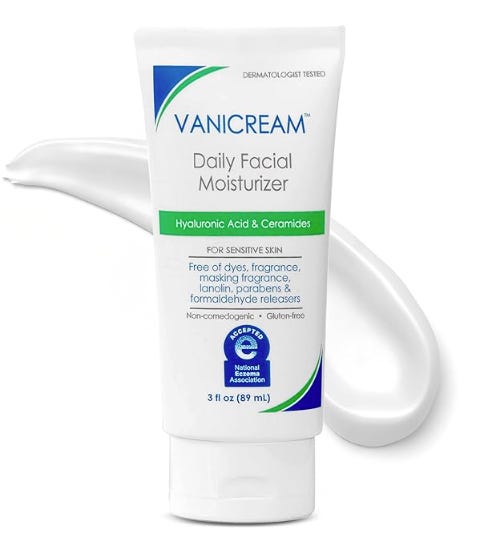
This is what I call a "boring but highly intelligent" moisturizer. With a lean count of just 20 ingredients, it doesn't need a multi-million dollar marketing campaign or artificial pink dyes to prove its worth. The formulation logic here is incredibly tight, clean, and practical.
The Hydration Logic: The baseline is exactly what it should be: water sits at the top to provide immediate surface hydration and act as the delivery vehicle for the rest of the actives.
The Humectant Team: Excellent and efficient. It uses a high concentration of gold-standard glycerin paired with hyaluronic acid for deep water-binding capacity. It also includes pentylene glycol, which pulling double duty as both a hydrating humectant and a mild, clean preservative helper.
The Emollient & Barrier Strength: This is where the formula truly shines. Instead of throwing in a single, token ceramide at the very bottom of the page for marketing clout, this brand dropped a serious, multi-lamellar ceramide complex: Ceramide EOP, NG, NP, AS, and AP. By combining five different ceramides with squalane, cholesterol-mimicking phytosterols, and hydrogenated lecithin, this product actively tries to replicate the natural lipid blueprint of your stratum corneum. It is pure, data-driven barrier logic.
The Occlusive Strategy (And How to Fix It): Here is the catch: the occlusive side is good, but it is not intense. It completely skips the heavy hitters:
No Petrolatum
No Mineral oil
No Dimethicone ( This make this Silicone-free!)
No Lanolin or Beeswax
Because it completely avoids silicones and heavy petroleum products, it feels incredibly light, elegant, and completely non-greasy as a daily face moisturizer. The downside? If you have chronically dry, cracked skin, or you’re dealing with harsh winter air, this lightweight barrier won’t be strong enough to stop water from evaporating overnight.
Mq simple Fix: You don't need to buy a different, chemical-laden cream to fix this. To lock this intelligent formula in at night, simply layer a few drops of pure jojoba oil right on top of it. The jojoba acts as your clean, natural occlusive shield, allowing the ceramide complex underneath to work its absolute magic while you sleep.
The “Zero-Exposure” Clean Sheet: For those of us meticulously auditing our routines for a TTC or pregnancy window, this list is a dream come true. It gives you absolute peace of mind:
No Retinoids or Vitamin A derivatives
No Fragrance or Essential oils
No Chemical sunscreen filters
No BHT/BHA
No obvious endocrine-disrupting or toxicological concerns whatsoever
The Verdict: At $13.97 for a generous 3 ounces, this is an absolute steal and a massive win for your wallet, your skin barrier, and your peace of mind. It cuts out the synthetic fluff and heavy silicone baggage, replacing them with a high-density, bio-identical lipid complex that respects your body's biology.
Best Suited For:
Normal, Combination, and Mildly Dry Skin: Perfect as a standalone, breathable daily morning moisturizer.
TTC / Pregnant / Sensitive Profiles: A total gold standard for a low-exposure, toxin-free lifestyle change.
Severely Dry Skin: Still highly recommended, provided you use my food-science hack and press a face oil (like jojoba) on top at night to lock it all in.
1. CeraVe Moisturizing Cream, Body and Face Moisturizer for Dry Skin, Body Cream with Hyaluronic Acid and Ceramides, Daily Moisturizer, Oil-Free, Fragrance Free, Non-Comedogenic
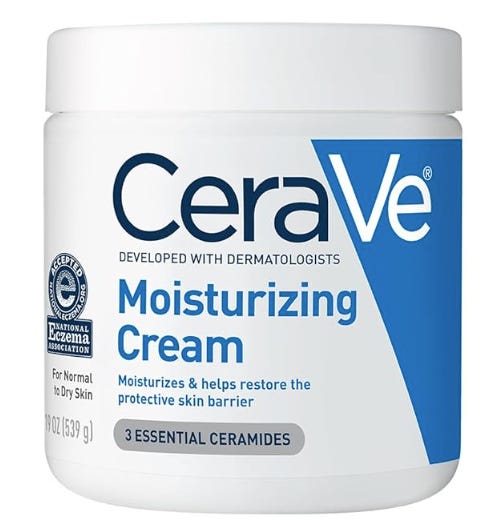
Overall rating
My Rating: ⭐⭐⭐⭐⭐ / 5
Pricing: $20.49 for 19 oz
Ingredients Count: 24 ingredients
Would I buy it: Already bought it. It’s arriving in 2 days. Plan to use at night time.
With 24 ingredients, this formula is an absolute masterclass in moisturizing architecture. It delivers the complete, gold-standard structural layout: Water + Glycerin + Fatty Alcohols + Petrolatum + Dimethicone + Ceramides + Cholesterol
The Formulation Breakdown:
The Hydration Base: Water opens the list to provide immediate surface hydration and successfully deliver the heavy-duty actives deeper into the stratum corneum.
The Humectants: Excellent. Glycerin sits very high on the list for baseline water-retention, and sodium hyaluronate (the salt form of hyaluronic acid) is added to aggressively bind extra water molecules.
The Emollients: Exceptional. By blending fatty alcohols, lightweight emollients, and caprylic/capric triglyceride, it floods the spaces between dry, flaky skin cells to instantly soften and smooth the surface.
The Occlusive Shield: Superb. It utilizes petrolatum - the single most effective occlusive ingredient known to dermatological science - and pairs it with dimethicone for a smoother finish. This double-layer shield stops transepidermal water loss in its tracks, making it vastly more protective than your average “lightweight” daily lotion.
Best parts of this formula
The crown jewel of this product is its inclusion of the complete barrier-repair trio: Ceramides, Cholesterol, and Fatty Lipids.
Your skin barrier is not made of ceramides alone; it requires a specific lipid matrix of ceramides, cholesterol, and fatty acids to function. This formula has all the parts, instead of a single ceramide near the end of the label for marketing clout.
Exposure Risk:
No Retinoids or Vitamin A derivatives
No Fragrance or Perfumes
No Essential oils
No Chemical sunscreen filters
No BHT/BHA
No Hydroquinone
No Strong exfoliating acids
Hyper-pure clean beauty blogs might flag ingredients like Phenoxyethanol, Ceteareth-20, Disodium EDTA, Dimethicone, and Petrolatum. But looking at the actual safety data, I do not treat these as automatic red flags at all. They are stable, well-studied, and entirely safe for topical use.
The Verdict:
At $20.49 for a massive 19-ounce tub, the value here is practically unbeatable - especially compared to that $17 half-ounce jar we passed on earlier
If you have oily, congested, or highly acne-prone skin, this formula will likely feel way too rich, heavy, and potentially pore-clogging.
However, if you have chronically dry, sensitive, or barrier-damaged skin, this is a holy grail product. It cuts out the synthetic marketing fluff and color dyes, replacing them with a highly functional, deeply protective barrier shield that respects your body’s biology. It is an elite formulation for dry skin types, especially during a low-exposure life transition.
This is the one I bought for night time!
In Conclusion:
Turns out the best moisturizers are not the fancy ones. Just the ones that show up and do the work.
Maybe I will do an audit on some of the fancier ones some day - do you have any suggestions on which ones I should research?
I would love to hear from you!
References:
Kaplan YC, Ozsarfati J, Etwel F, Nickel C, Nulman I, Koren G. Pregnancy outcomes following first-trimester exposure to topical retinoids: a systematic review and meta-analysis. Br J Dermatol. 2015 Nov;173(5):1132-41. doi: 10.1111/bjd.14053. Epub 2015 Oct 19. PMID: 26215715.
https://www.acog.org/clinical/clinical-guidance/committee-opinion/articles/2021/07/reducing-prenatal-exposure-to-toxic-environmental-agents
https://pubmed.ncbi.nlm.nih.gov/17267908/
https://pubmed.ncbi.nlm.nih.gov/35014224/